


CaroSnap-Shorts & Dramas
1.617.00 Reviews
App Specs
- Version
- 1.0.3
- Updated On
- License
- Free
- Downloads
- 10,000+
- Developer
- ironblaze
- Categories
- Entertainment
- Platform
- Android
Screenshots

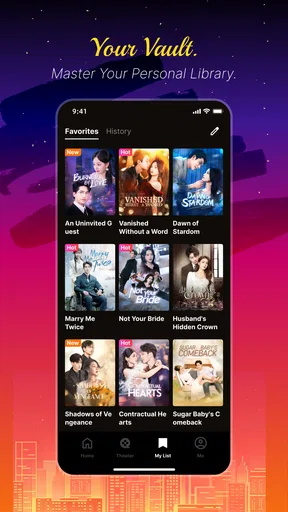
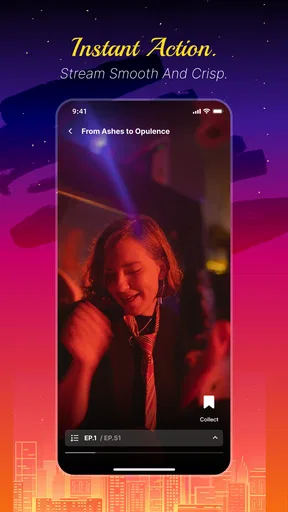
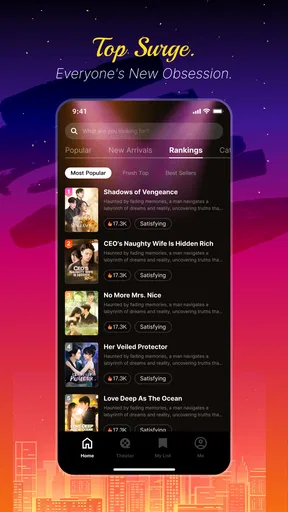
 Analysis by AppCompare
I spent time with CaroSnap-Shorts & Dramas as a lightweight entertainment app, and my first impression is that it is trying to fit quick viewing into the gaps of an ordinary day. The idea is easy to understand: open the app, browse short-form entertainment, and settle into something that does not demand the commitment of a full movie or a long television episode. That makes it potentially appealing when I have only a few spare minutes, although the experience is held back by the limited public track record around it and by the presence of costly in-app purchase tiers.
The app comes from ironblaze and sits in the Entertainment category. It is free to install, carries an Everyone age rating, and runs on devices using Android 9 or later. Its current version is 1.0.3, so the product is still at an early stage rather than being a mature service with years of refinement behind it. CaroSnap has passed the 10K-install mark, but its average rating is only 1.6 from roughly 54 ratings, with about 17 written reviews. I would not treat those figures as the whole story, but they are important context before deciding how much time or money to put into it.
How the free starting point affects its value
I find the free starting point most useful as a way to test whether short dramas suit your viewing habits before you spend anything. I’d use an early session to notice not just which stories catch my attention, but whether I can browse and stop comfortably without feeling pushed toward a purchase. That distinction matters because a no-cost download is only good value if the experience works for you on its own.
Free to install does not mean unlimited value
The clearest financial advantage is the starting cost: I can download the app without paying an upfront purchase price. That makes it reasonable to test the interface and see whether its short entertainment format fits my habits. For someone who is simply curious, the free entry point lowers the risk of trying it during a commute, a lunch break, or a quiet evening.
The more important detail is that the app includes in-app purchases ranging from $7.99 to $299.99 per item. That is a very wide spread, and it changes how I judge the word “free.” The installation may cost nothing, but the overall value depends on what can be enjoyed without spending and how quickly the app presents paid options during normal use. I would therefore treat the free version as a trial opportunity, not as proof that the complete viewing experience is free.
Because the purchase range reaches a high level, I would be especially careful before confirming anything inside the app. A sensible approach is to explore the available viewing experience first, note whether the free portion feels satisfying, and only then consider a purchase. I would not spend simply because a story has created a cliffhanger or because a limited-time prompt makes the decision feel urgent. The key question is whether the entertainment already delivered justifies the specific item being offered.
What the price tells me about the decision
A free download is valuable when it lets me understand the service before I commit. In this case, that means checking the opening experience, the pace of browsing, and whether the available shorts and dramas match my taste. If I enjoy short episodes but dislike frequent interruptions or purchase prompts, the app may not be a good fit even though installation costs nothing.
Worth Reading Before You Choose

Flipboard Shows What News Apps Must Do Beyond the Feed

Switching to Android Auto Means Rethinking Your Driving Routine

Google Calendar Makes a Crowded Week Easier to Manage

Ludo King Makes the Most of the Minutes Between Plans

Baby Panda World Brings Quick Play to Modern Phones, but Its Game Library Feels Busy

ESPN’s Live Game View Makes Following Close Games Easier
I also would not compare the highest purchase option directly with a conventional streaming subscription. They are different kinds of spending. A subscription usually gives predictable access across a catalog, while an individual in-app item may be tied to a particular piece of content or a particular progression path. The app’s listed purchase range does not, by itself, establish how much viewing each item provides, so I would judge each offer by its clearly stated contents rather than by the headline price alone.
For a household, the Everyone rating makes the app broadly approachable from an age-label perspective, but that label should not be mistaken for a guarantee that every dramatic theme will suit every child. I would still preview the material and decide whether it matches the viewer’s maturity and preferences. The rating is useful as a broad guide, not a replacement for personal judgement.
My practical spending rule
If I were recommending this to a friend, I would suggest setting a firm limit before browsing. I would use the free installation to answer three questions: do I enjoy the short format, can I find enough content that interests me, and does the app remain comfortable to use without buying anything? Only if all three answers are positive would I consider a paid item.
That workflow is more useful than assuming that a large purchase automatically offers better value. A person who watches occasionally may get more satisfaction from staying free, while a dedicated fan of the available dramas may decide that a particular purchase is worthwhile. The important distinction is between paying for something I already know I want and paying to discover whether I might want it.
What the app delivers during everyday use
For everyday use, I’d think of CaroSnap as something to open for a short, deliberate break rather than a replacement for a full streaming service. A useful test is whether a brief session feels complete enough to fit between tasks, even when I don’t have time to follow a story for long. That makes the app’s practical appeal depend as much on easy stopping as on finding a drama I want to watch.
Short viewing suits fragmented time
The strongest reason to try this app is the format itself. Short entertainment works well when I do not have the attention span or time for a full-length production. I can imagine opening it after finishing a task, watching for a few minutes, and stopping without feeling that I have abandoned a major commitment. That is a different use case from a traditional streaming app, where I often spend as much time choosing what to watch as actually watching it.
It also fits people who enjoy dramatic momentum but prefer small portions. A short drama can provide a quick emotional beat, a compact scene, or a continuing storyline without asking me to reserve an entire evening. If the app’s selection matches my interests, that structure could make it a convenient source of casual entertainment.
One realistic scenario is a bus ride with several stops. I might have enough time for a few short pieces but not enough certainty about the journey to begin a film. In that situation, a short-form app is easier to put down. I can stop when I arrive rather than searching for a safe pause point in a much longer program.
Where it differs from familiar alternatives
Compared with long-form streaming services, the main attraction is lower commitment rather than a larger or more dependable catalog. A conventional service is usually better when I want a polished film, a complete episode, or a predictable viewing plan. CaroSnap is more suitable when I want something quick and episodic, provided its selection gives me enough reasons to return.
Compared with social video platforms, a shorts-and-dramas app may feel more focused. Social feeds are excellent for variety and discovery, but they can also pull me into unrelated clips and endless scrolling. A dedicated entertainment app has a clearer purpose: I am there for short stories and dramatic viewing rather than a mixture of news, comedy, advertising, and personal updates. The trade-off is that social platforms often have a deeper stream of content and more mature recommendation systems.
Compared with free video platforms, this app’s potential advantage is a more specific viewing identity. The disadvantage is that free platforms make it easier to sample many creators and subjects without committing to a purchase. If I want broad experimentation, the usual free alternatives may serve me better. If I want short dramatic content in one place, this app has a more focused reason to exist.
Three ways I would test it efficiently
My first test would be a no-spend session. I would browse until I had a clear sense of whether the available material actually interests me, rather than judging the app from its store summary alone. I would pay attention to how quickly I can reach something watchable and whether the app makes me feel entertained or merely encourages me to keep tapping.
My second test would be a stopping test. After watching a small amount, I would close the app and return later. This reveals whether the experience works as casual entertainment or whether it only feels engaging when I keep moving through prompts. For short-form viewing, easy stopping is a real part of the product’s value, because the whole point is to fit around my schedule.
My third test would be a purchase-awareness test. I would inspect what an offered item includes, whether the cost is clearly displayed, and whether I understand what I would receive before confirming. This is a useful habit here because the in-app purchase range is broad. I would never rely on the free label alone when deciding whether the full experience is economical.
Where the experience may create friction
The low average rating is the biggest warning sign I would keep in mind. A rating of 1.6 suggests that many users have been dissatisfied, even though ratings can reflect different expectations and individual problems. I would not dismiss the app solely on that basis, but I would lower my expectations and avoid treating it as a proven replacement for established entertainment services.
The relatively early version also matters. Version 1.0.3 can improve over time, but an early product may feel less polished in navigation, content organization, or purchase presentation than an app with a longer development history. I would be patient with small rough edges, yet I would not excuse confusion around paid access. Entertainment should be easy to start, and the path from browsing to viewing should feel understandable.
Another trade-off is emotional investment. Short dramas often rely on momentum, so I may become interested before I know how much of the story is freely available. If access changes at an important moment, the experience can feel less like relaxed entertainment and more like a sequence of decisions about spending. That is why I would sample several titles or formats before becoming attached to one storyline.
Who is most likely to get value
I see the best fit as someone who regularly has brief pockets of free time and specifically enjoys short dramatic entertainment. That could include a viewer who prefers episodic stories to random clips, a commuter who wants something easy to pause, or a casual user who does not want to maintain a large streaming subscription for occasional viewing.
It may also suit people who like trying new entertainment apps without paying at the door. The free installation lets them explore first, and the Everyone rating makes the app broadly accessible as a starting point. Still, I would recommend keeping the first session exploratory and resisting the assumption that every interesting title needs an immediate purchase.
I would suggest skipping it if I wanted a dependable catalog, highly polished discovery tools, or a simple monthly cost with no individual purchase decisions. Someone who mainly watches films, prestige series, or long episodes will probably find a conventional streaming option more satisfying. Likewise, a viewer who wants endless variety may prefer a broad video platform over an app centered on short dramas.
Parents should make their own viewing decision rather than relying only on the age label. The Everyone rating is reassuring as a general classification, but a parent may still want to look at the actual dramatic material before handing the device to a child. That is a normal precaution for any entertainment service with changing content.
What I would want to know before paying
Before buying anything, I would want a clear understanding of the exact item, how much content it unlocks, and whether it is useful for my preferred viewing pattern. I would also consider whether I am likely to return often enough to justify the expense. A purchase that gives me one enjoyable session can be worthwhile for a committed fan, but it is poor value for someone who opens the app only once every few weeks.
I would not use the number of installs as a reason to spend. Passing 10K installs shows that people have tried the app, but it does not tell me whether its content matches my taste or whether paid access will feel fair. The same applies to the rating count: public activity provides context, while my own free trial should decide whether the product works for me.
My buy-or-skip verdict
My verdict is to try, but not to buy immediately. The free installation makes a cautious test reasonable, and the short-form focus could be genuinely convenient for viewers who want quick dramas rather than full-length programs. I can see a place for it in a spare-minute routine, especially when I want a story with more structure than a random social clip.
However, I would keep the recommendation limited. The 1.6 average rating, the early version, and the purchase range reaching $299.99 per item make this an app I would approach carefully rather than confidently recommend as a primary entertainment service. The smartest value comes from using the free access as a screening step, not treating it as an invitation to spend.
If the available viewing feels enjoyable without payment and a clearly explained item matches a specific title I already like, a modest purchase may make sense for that individual user. If the app quickly becomes frustrating, unclear, or too expensive for the amount of entertainment it provides, I would leave it installed nowhere and return to a familiar alternative. For me, this is a cautious experiment for short-drama fans, not an automatic buy.
In short, ironblaze has positioned CaroSnap as a compact entertainment option for quick sessions, and that idea is appealing. The decision comes down to personal viewing habits and spending discipline. I would recommend it to a curious friend with one condition: explore first, understand every paid offer, and only pay when the value is obvious before the purchase is made.
Pros
- Short episodes are easy to watch during quick breaks.
- Vertical video format feels natural on mobile devices.
- Frequent story updates can keep daily viewers engaged.
- Simple browsing makes it easy to discover new dramas.
- Lightweight episodes may use less time than traditional series.
Cons
- Some stories may end on cliffhangers that require continued viewing.
- Content quality can vary noticeably between different productions.
- Small-screen subtitles may be difficult to read for some users.
- The catalog may offer limited choices in certain languages or regions.
- Video streaming can consume significant mobile data without Wi-Fi.
FAQs for CaroSnap-Shorts & Dramas
What is CaroSnap-Shorts & Dramas?
CaroSnap-Shorts & Dramas is an entertainment app focused on short-form video dramas and bite-sized fictional stories. Its content is designed for quick viewing sessions, making it suitable for users who enjoy serialized romance, family, mystery, or emotional stories without committing to full-length television episodes. The exact selection and available categories may vary by region and app updates.
Is CaroSnap-Shorts & Dramas free to download and use?
The app may be available to download at no initial cost, but some episodes, premium stories, or viewing features can require in-app purchases, subscriptions, virtual coins, or advertising-supported access. Before watching extensively, check the pricing information shown in the app store and inside the application. Also review renewal terms carefully if you activate a recurring subscription.
Does CaroSnap-Shorts & Dramas require an internet connection?
An internet connection is generally needed to browse the catalog, load video episodes, synchronize progress, and access account-related features. Depending on the version of the app, selected content may support temporary offline viewing, although this is not guaranteed for every title or device. Streaming over mobile data can consume a significant amount, so Wi-Fi is recommended for longer viewing sessions.
Is CaroSnap-Shorts & Dramas suitable for children?
Parents should review the app’s age rating, content descriptions, and individual dramas before allowing children to use it. Short dramas can include romantic themes, intense arguments, frightening situations, mature dialogue, or other topics that are not appropriate for younger viewers. Since content can change over time, parental supervision and device-level purchase restrictions are advisable, particularly when the app includes paid episodes or subscriptions.
What permissions and account features does CaroSnap-Shorts & Dramas use?
The permissions required by CaroSnap-Shorts & Dramas can differ between Android and iOS and may change with updates. Video applications commonly request network access and may offer optional notifications, personalized recommendations, analytics, or account synchronization. Read the permission prompts instead of approving everything automatically, and check the privacy policy to understand how viewing activity, device information, and account data may be collected or used.


